
Melbourne Shoulder Rehab – Expert Physiotherapy for Complex Shoulder Conditions
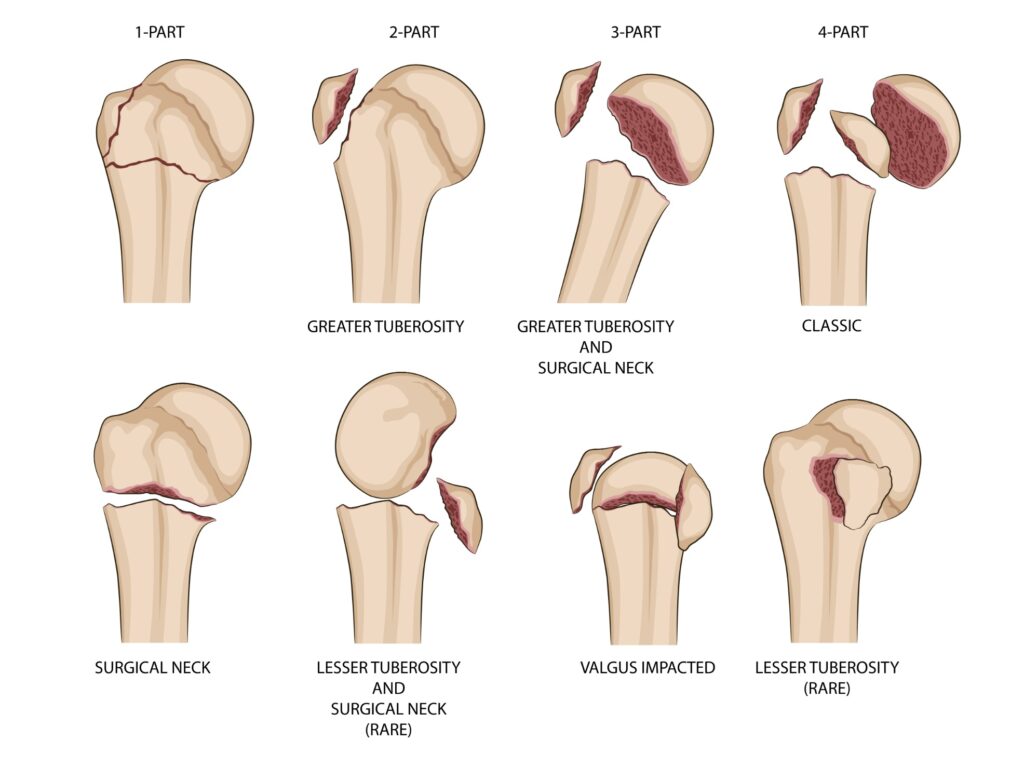
A shoulder fracture refers to a break in one of the bones that forms the shoulder joint. This includes the upper arm (humerus), the collarbone (clavicle), or the shoulder blade (scapula). Fractures may range from simple cracks that remain stable, to more complex injuries involving multiple fragments or joint surfaces.
For many people, hearing the word “fracture” immediately raises concerns about surgery, long-term function, or delayed healing. The good news is that many shoulder fractures heal well with conservative care, especially when treatment is guided by current evidence and structured rehabilitation.
This article outlines the types of shoulder fractures, when surgery may or may not be required, what to expect during recovery, and how physiotherapy supports every stage of healing.
🦴 Types of Shoulder Fractures and Their Implications
The shoulder is made up of three bones:
- Proximal humerus – the top of the upper arm bone, forming the “ball” of the joint
- Clavicle – the collarbone, connecting the shoulder to the chest
- Scapula – the shoulder blade, which anchors the muscles of the shoulder
Each of these bones can fracture in different ways, and the management depends on the location, the severity, and whether the bone fragments remain in good alignment.
1. Proximal Humerus Fracture
- Common in older adults following a fall
- Non-displaced fractures (where the bone remains in position) usually heal well with immobilisation and physiotherapy
- Displaced or multi-part fractures may require surgical stabilisation if alignment or joint congruency is compromised
2. Clavicle Fracture
- Common in sports or falls, particularly in younger adults
- Most fractures heal without surgery
- Operative management may be considered if there is significant shortening, displacement, or if the fracture fails to unite
3. Scapula Fracture
- Less common, typically resulting from high-energy trauma (e.g. motor vehicle accidents)
- Many scapular fractures are managed non-operatively
- Surgery is reserved for those that involve the glenoid (socket) or result in functional instability
⚖️ When Is Surgery Necessary?
Not all shoulder fractures require surgery. In fact, many can be managed effectively with structured, non-operative care — particularly when the bone fragments are well-aligned and the joint remains stable.
Surgery may be indicated when:
- The bone fragments are significantly displaced or angulated
- The fracture involves the articular surface (joint)
- There is associated shoulder dislocation or instability
- The patient has high functional demands (e.g. manual labour, elite sport)
- There is a high risk of delayed or non-union
Conservative (non-surgical) treatment is often preferred when:
- The fracture is stable and well-aligned
- The joint surface is not compromised
- The individual is likely to tolerate a period of immobilisation and progressive rehab
- Surgical risks outweigh potential benefits
📚 The PROFHER trial (2015) found no significant difference in long-term outcomes between surgical and non-surgical treatment for many proximal humerus fractures in older adults.
⏳ Recovery Timeframes and Potential Complications
Bone healing typically occurs over 6 to 8 weeks, but a return to full function often takes longer — particularly in more complex cases.
General Recovery Timeline:
- Weeks 0–2: Immobilisation (sling use), swelling and pain control
- Weeks 3–6: Guided mobilisation begins to restore early range of motion
- Weeks 6–12: Progression to strength-based rehab and return to light activities
- 3–6 months: Return to work, sport, and higher-demand tasks
- 6–12 months: Ongoing improvement in complex or surgical cases
🩸 Avascular Necrosis (AVN): A Rare but Serious Complication
In some complex proximal humerus fractures, the blood supply to the humeral head can be disrupted — particularly the anterior humeral circumflex artery, which nourishes the bone. If this blood flow is compromised, a portion of the bone may die, leading to avascular necrosis (AVN).
AVN may cause:
- Gradual collapse of the bone
- Increasing pain and stiffness
- Progressive loss of shoulder function
- The need for joint replacement surgery
AVN is more likely in:
- 3- or 4-part fractures (as per Neer classification)
- Fracture-dislocations
- Elderly patients with poor bone quality
- Injuries involving surgical hardware or trauma to the vasculature
As physiotherapists, we monitor for red flags such as worsening symptoms after initial improvement, unexpected loss of motion or strength, or poor progress in rehab.
🏋️♀️ The Role of Physiotherapy in Shoulder Fracture Recovery
Physiotherapy plays a central role in recovery — both in surgical and non-surgical cases. Our goal is to restore movement, rebuild strength, and help you return to your previous level of activity while minimising complications.
Key phases of physiotherapy:
✅ Early Stage (0–3 weeks)
- Sling education and safe use
- Pain and swelling management
- Active movement of nearby joints (elbow, wrist, hand)
- Early postural strategies to prevent stiffness
✅ Mid Stage (3–8 weeks)
- Gradual shoulder mobilisation as guided by your fracture healing
- Controlled range-of-motion exercises
- Basic strength and scapular control
✅ Late Stage (8+ weeks)
- Functional rehabilitation tailored to your occupation or sport
- Advanced strength and endurance training
- Return-to-work or return-to-sport planning
Physiotherapy also plays a crucial role in helping patients avoid unnecessary surgery by supporting natural healing, optimising movement patterns, and identifying potential barriers to recovery early.
📚 What the Evidence Says
- PROFHER Trial: Conservative treatment in many proximal humerus fractures yields comparable long-term results to surgery
- Cochrane reviews support early mobilisation for reducing stiffness and improving function
- Functional outcomes improve significantly with structured, progressive rehabilitation — particularly when started early and adapted to the individual’s needs
💡 Expert, Evidence-Based Care for Shoulder Fractures
At Melbourne Shoulder Rehab, we provide physiotherapy that’s tailored to your injury, your goals, and the current best evidence. Whether you’ve just left the emergency department, are recovering post-op, or feel your recovery has stalled — we offer support, structure, and clarity.
📞 Ready to Begin Your Recovery?
We help you avoid surgery when possible, support healing, and guide your return to work, sport, and daily life.
👉 Book a shoulder fracture consultation today at Melbourne Shoulder Rehab
📍 Croydon | 📍 Melbourne
🔗 www.melbourneshoulderrehab.com.au