
Science-backed, Individualised Care at Melbourne Shoulder Rehab
Rotator cuff–related shoulder pain (RCRSP) is one of the most common shoulder conditions we treat—and also one of the most misunderstood. If you’ve been told you have a rotator cuff problem, you might be imagining torn tendons, long recoveries, or needing surgery. But most people recover well without any of that.
At Melbourne Shoulder Rehab, we focus on what works. Here’s everything you need to know about rotator cuff–related shoulder pain.
🤔 What Is Rotator Cuff–Related Shoulder Pain?
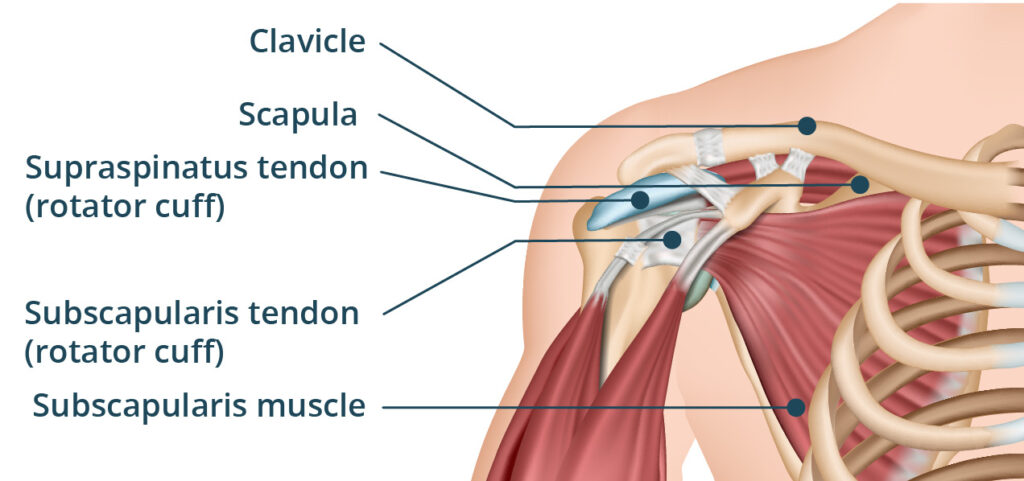
The rotator cuff is a group of four small muscles and tendons that help stabilise and move your shoulder joint. When shoulder pain arises—especially during lifting, reaching, or sleeping on the affected side—it’s often attributed to this region.
Rather than assigning a specific diagnosis like “impingement” or “tendinitis,” many clinicians now use the term rotator cuff–related shoulder pain (RCRSP). It’s a broad, umbrella term that includes:
- Tendinopathy (overload or irritation of the tendon)
- Subacromial pain (pain beneath the acromion which is the area along the outer edge of your collar bone)
- Partial or full-thickness rotator cuff tears
- Bursal inflammation
- Pain without clear findings on scans
We use this term because the shoulder has many pain-sensitive structures, and it’s often impossible to confidently pinpoint one single cause. In some cases, people may experience significant pain even without any tissue damage, due to the way the nervous system processes pain and how factors like stress, sleep, and previous injury can heighten sensitivity.
This diagnostic approach helps us focus less on scary-sounding scan results, and more on function, recovery, and what helps you get better.
📋 Common Signs and Symptoms of RCRSP
Rotator cuff–related shoulder pain often develops gradually, though it can also begin after a sudden strain or awkward movement. Common symptoms include:
- 💥 Pain at the side or front of the shoulder, especially when lifting the arm
- 💤 Pain when lying on the affected shoulder
- 🧍 Difficulty reaching overhead or behind your back
- 🏋️ Weakness when lifting, pressing, or carrying
- 🚫 Reduced range of motion due to pain or guarding
The pain may be dull, achy, or sharp depending on severity, and tends to fluctuate with activity. These symptoms are very common—and don’t necessarily indicate severe damage.
🚫 5 Common Misconceptions About Rotator Cuff Injuries
1. “I must have torn something if it hurts this much.”
Pain doesn’t always equal damage. Many people with rotator cuff pain have no structural tear, and even those who do often recover well with rehab.
2. “It’s worn out and can’t get better.”
Age-related changes in the rotator cuff—like tendinosis, thinning, or partial tears—are extremely common, even in people with no pain at all. These findings are a normal part of ageing, not a sentence for surgery or disability.
In fact, the shoulder is remarkably adaptable. Over the years, we’ve seen patients with scans showing complete tears of all four rotator cuff muscles—yet with no surgery, they’ve regained pain-free, functional shoulder movement through targeted rehab.
This shows that your body is capable of more than the scan suggests. With the right plan, you can still restore strength, control, and confidence—even if your MRI looks “worn.”
3. “I should rest it completely to avoid more damage.”
While rest might feel protective, prolonged inactivity can lead to muscle wasting (atrophy)—especially in the rotator cuff. Studies show that atrophy is linked with poorer long-term outcomes, particularly in people with existing tears. Movement, done the right way, supports healing.
4. “Surgery is the only solution for a torn rotator cuff.”
For most people, even those with partial or small full-thickness tears, conservative rehab leads to equal or better outcomes than surgery—especially in the absence of major weakness or functional loss.
5. “Strengthening is all I need to fix it.”
While building strength is key, it needs to be timed and scaled properly. Jumping into heavy or advanced exercises too soon can aggravate symptoms and delay recovery.
⚠️ Corticosteroid Injections (CSI): Know the Risks
Corticosteroid injections are sometimes used to reduce pain and inflammation, especially when symptoms are severe. However, they are not a long-term fix, and are generally not recommended as a first-line treatment.
Potential Risks and Limitations:
- ⏳ Short-lived relief, often wearing off in weeks or months
- 💪 Tendon weakening, especially with repeated injections
- 🔄 Rebound pain once the medication wears off
- ❌ Delayed rehab, as people may resume activity too soon without resolving the root cause
Research shows that CSI given before starting physiotherapy can actually reduce long-term outcomes. At Melbourne Shoulder Rehab, we usually recommend CSI only when pain is completely limiting all movement or sleep and rehab isn’t possible without it.
✅ Physiotherapy: Your Most Effective Path Forward
Physiotherapy remains the gold standard for treating rotator cuff–related shoulder pain. We don’t do one-size-fits-all rehab—we assess your needs, symptoms, and goals to build a personalised recovery plan.
At Melbourne Shoulder Rehab, treatment may include:
- 🔍 Education to help you understand what’s driving your pain
- ✋ Hands-on therapy to ease symptoms and improve movement
- 🧠 Pain-guided activity modification to keep you functional
- 🏋️ Progressive loading and strengthening, adjusted to your capacity
- 🤝 Team-based care, including GP and surgeon referrals when needed
We also keep the big picture in mind: lifestyle, work demands, hobbies, stress levels—all of it matters in shaping your recovery.
⏳ What Happens If It’s Left Untreated?
Not all shoulder pain requires formal rehab. Sometimes, symptoms arise from simply doing too much, too soon—like overdoing push-ups, overhead lifting, or DIY work—and in these cases, a period of relative rest and load reduction may be enough for things to settle.
But when pain persists beyond a few weeks, affects your daily function, or is linked to underlying pathology—such as a tear, tendon thickening, or ongoing weakness—then doing nothing often leads to a longer, more frustrating recovery.
In those cases, untreated shoulder pain can result in:
- Persistent discomfort or sleep disruption
- Loss of strength, control, or range of motion
- Compensatory movement patterns from other joints or muscles
- Difficulty with everyday tasks or returning to sport/work
- In some cases, secondary issues like frozen shoulder
The good news? Even longstanding pain can improve with the right approach. It’s rarely too late to intervene—and doing something about it doesn’t have to be overwhelming. That’s what we’re here for.
💬 Final Word
Rotator cuff–related shoulder pain is common, frustrating, and sometimes persistent—but it is very treatable. A clear plan, guided movement, and expert support make all the difference.
At Melbourne Shoulder Rehab, we’re here to help you understand your pain, feel better fast, and regain confidence in your shoulder.
📞 Ready to Take the First Step Toward Recovery?
Whether your pain is new or has been lingering for months, we’re ready to help.
👉 Book your personalised shoulder assessment today and let’s build your recovery plan together.