
🤔 What Is Long Head of Biceps Tendinopathy?
You might not have heard of it before, but long head of biceps tendinopathy is a surprisingly common cause of shoulder pain—especially in people who lift, reach, or work with their arms overhead.
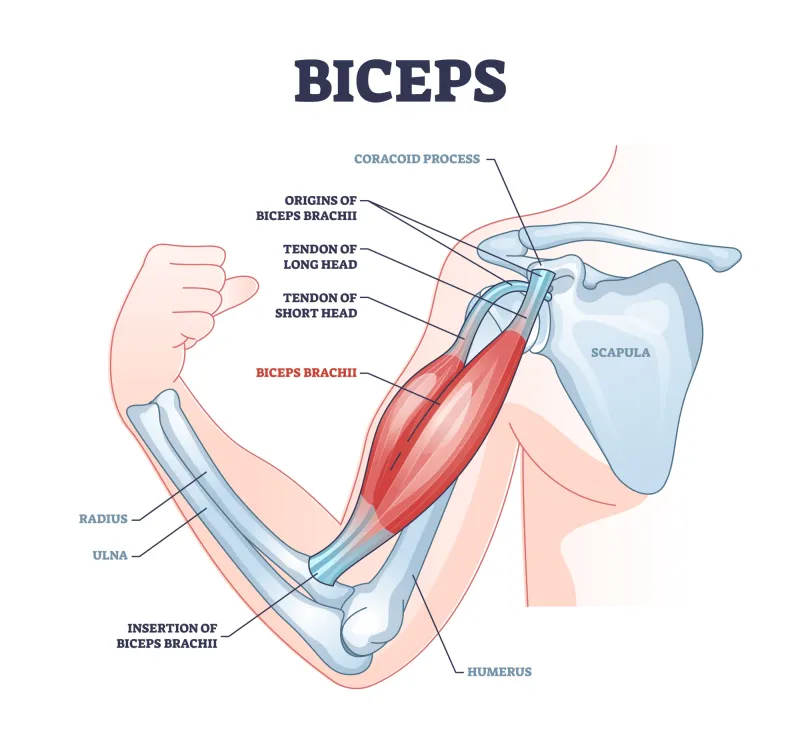
This condition involves irritation or sensitivity in the long head of the biceps tendon, which runs from your upper arm and anchors deep inside the shoulder joint. It often shows up as a dull ache or sharp twinge at the front of the shoulder, particularly during repetitive or overhead movements.
🧠 Functional Anatomy: Why the Long Head of Biceps Gets Irritated
The biceps brachii has two upper tendons. The long head travels through a groove at the front of the upper arm and attaches inside the shoulder joint, while the short head connects to the front of the shoulder blade.
Because of its deep placement and dynamic role, the long head tendon helps:
- Support shoulder stability during reaching, lifting, and overhead activity
- Assist in lifting the arm and rotating the shoulder
But this also means it’s subject to:
- High loads, especially during repetitive or heavy arm use
- Mechanical stress from nearby structures when shoulder coordination is off
- Increased sensitivity when other areas of the shoulder aren’t functioning optimally
This helps explain why it commonly affects:
- Active individuals (gym-goers, swimmers, climbers)
- Tradespeople or manual workers
- Adults over 40, where natural changes in tendon structure may reduce load tolerance
Tendinopathy doesn’t necessarily mean damage—it often reflects a mismatch between load and recovery. The tendon becomes sensitised, less efficient at absorbing load, and potentially painful with certain tasks.
📍 Common Signs and Symptoms
People with long head of biceps tendinopathy often report:
- Pain or ache at the front of the shoulder
- Discomfort when lifting, reaching overhead, or pulling
- Pain when performing curls or resisted elbow movements
- Tenderness over the biceps groove (just below the front of the shoulder)
- Intermittent clicking or popping with movement
- Sleep disturbance, especially lying on the affected side
It may also occur alongside other shoulder presentations—like rotator cuff–related shoulder pain or shoulder stiffness.
🔬 What Causes It?
There isn’t a single cause. Rather, it develops when the demands placed on the tendon exceed its current capacity, especially over time or with sudden changes in load.
Contributing factors include:
- Excessive or unaccustomed loading (e.g. return to overhead gym work or sport)
- Reduced shoulder strength or control, especially in the rotator cuff and scapular muscles
- Movement patterns that increase the strain on the biceps tendon
- Age-related tendon changes, which are normal but may reduce adaptability
Contrary to older views, the problem isn’t necessarily inflammation or tearing—it’s more about a disrupted healing response and increased sensitivity in the tissue.
🛠️ Treatment Options That Work
There is strong evidence that rehabilitation-focused physiotherapy is the first-line treatment.
At Melbourne Shoulder Rehab, we use a proven, personalised process:
✅ 1. Load Management
We help you identify and temporarily modify movements that provoke symptoms—without avoiding activity altogether. This allows the tendon to settle while maintaining shoulder function.
✅ 2. Hands-On Support
Soft tissue techniques, needling, or manual therapy may offer short-term relief and support confidence in movement. These are used strategically alongside active rehab.
✅ 3. Progressive Rehab
This is the cornerstone. Rehab is tailored to you and may involve:
- Strengthening your rotator cuff and shoulder blade muscles
- Loading the biceps tendon in a way that promotes resilience
- Gradually reintroducing overhead or resisted tasks
We progress exercises based on your response—never forcing painful movements, but also not avoiding challenge.
✅ 4. Short-Term Medication (If Needed)
In some cases, a short course of anti-inflammatories may help settle a reactive tendon. Always in consultation with your GP or pharmacist.
🚫 What About Injections or Surgery?
Corticosteroid injections may reduce pain in the short term, but they don’t address the root cause—and over-reliance can delay recovery.
Surgery (e.g. biceps tenodesis or tenotomy) is rarely needed unless symptoms persist despite high-quality rehab or there’s another coexisting condition requiring surgical management. Most people do not require surgery and do very well with conservative care.
⏳ What Happens If It’s Not Treated?
Left unmanaged, symptoms may persist or fluctuate depending on activity levels. Some people compensate with other movements, which can lead to additional areas of overload or frustration with performance.
In some older adults, the tendon may rupture spontaneously. This can sound alarming—but often doesn’t result in significant weakness and can even reduce pain. That said, early physiotherapy intervention can help prevent this scenario, maintain function, and support your goals.
The key takeaway: you’re not fragile, and recovery is highly achievable with the right approach.
🙌 Recovery Is Possible—With the Right Help
At Melbourne Shoulder Rehab, we specialise in evidence-informed treatment for shoulder and upper arm pain, including biceps tendinopathy. Whether you’re managing a flare-up, struggling with work tasks, or unsure how to train pain-free, we’ll guide you from relief through to full recovery.
💬 Book an Assessment Today
- ✅ Expert shoulder physiotherapists
- ✅ Hands-on care and progressive rehab
- ✅ Melbourne-based with flexible appointments
Take the first step to feeling better—schedule your consultation now.